How to Eat Hitsumabushi Like a Local in Nagoya
How to eat hitsumabushi like a local: the four portions, the condiments and the dashi, plus three top-rated Nagoya eel houses with real wait times.

Here's how to eat hitsumabushi like a local: divide the tub of eel and rice into four, then eat the first portion plain, the second with condiments, the third with hot broth, and the last however you liked best. Nagoya's signature eel dish comes with instructions because the changes are the whole idea. Below is the routine and three places to try it. Tabelog ratings are as of November 2026.
How to eat hitsumabushi in four portions
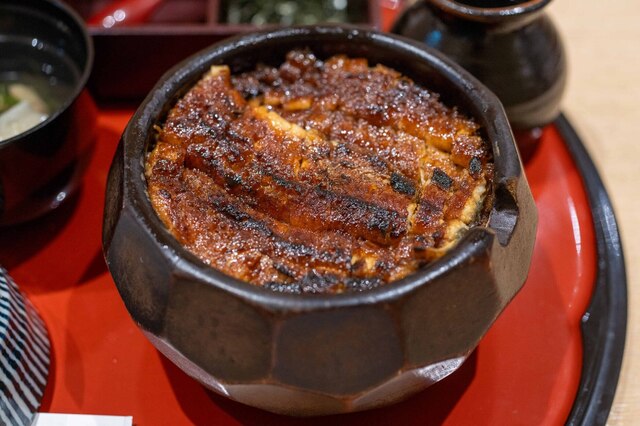
Your tray arrives with a wooden tub, a small empty bowl, a paddle, condiments and a pot of dashi (broth) or tea. Hitsumabushi guides describe the same order. Score the rice into quarters with the paddle before you start, so you don't eat too much in round one.
First: plain. Scoop a quarter into your small bowl and eat it as it is. This is the only time you taste the grilled eel and sauce alone, so notice the crisp skin.
Second: with condiments. Add some of the yakumi (condiments) to the next quarter. Expect some mix of green onion, wasabi and nori. Mix lightly and eat.
Third: with broth. Add condiments again if you like, then pour hot dashi or tea over the third quarter, like ochazuke (rice in broth). It's a lighter finish after the rich sauce.
Fourth: your favorite. Repeat whichever round you liked best. That's your only decision of the meal.
How to eat hitsumabushi without the common mistakes
Use the bowl. The tub is the serving dish. Keep eating from the small bowl, and don't pour broth into the tub.
Ask for help. It's perfectly fine to ask the staff how to eat it, and many shops have illustrated pamphlets with English versions. Asking counts as good manners here.
Don't save the eel. Part of learning how to eat hitsumabushi is pacing: take some eel and rice together in each scoop so the last quarter isn't plain rice.
Don't skip a round to be polite. You can leave out the wasabi or the broth if you don't like them. The four steps are a suggestion, and no one is keeping score. Wikipedia's overview has more on where the dish comes from.
Where to try it
These three are all Tabelog 100 unagi restaurants, with a big gap in how long you'll wait. All three take cards. For context on the numbers, see how to read Tabelog scores, or browse the wider unagi guide.
1. Atsuta Houraiken Honten, the famous main shop
Atsuta Houraiken near Atsuta Shrine has 180 seats and still has serious waits: one reviewer arrived at 11:30 and was told a table would be ready at 13:20. Arrive early, and if the wait is long, the shrine is close by. A reviewer paid ¥5,150 for hitsumabushi with a large rice portion, plus ¥300 to change the soup to liver soup. A second reviewer says the house dates to 1873.
Tabelog: 3.71 (4,406 reviews) · Budget: ¥4,000–¥4,999 lunch, ¥5,000–¥5,999 dinner · Pay: cash, card (VISA, Mastercard, JCB, AMEX, Diners); no QR or e-money · Reservations: kaiseki only · Seats: 180 · Hours: 11:30–14:00 and 16:30–20:30, closed Wednesdays and second and fourth Thursdays · Getting there: 8 min walk from Temmacho Station, exit 4

2. Atsuta Houraiken Matsuzakaya, the central option
The Matsuzakaya branch is on the 10th floor of the department store's south building in Sakae, and it's the better pick if you're short on time. Waits still happen: one couple faced an hour at 17:00, though there's a waiting area with plenty of seating. It stays open all afternoon on weekends and has the widest range of payment options here.
Tabelog: 3.68 (3,003 reviews) · Budget: ¥5,000–¥5,999 lunch, ¥6,000–¥7,999 dinner · Pay: cash, card (VISA, Mastercard, JCB, AMEX, Diners, UnionPay), PayPay and other QR; no e-money · Reservations: kaiseki only · Seats: 110 · Hours: weekdays 11:00–14:30 and 16:30–22:00, weekends and holidays 11:00–22:00, last order 20:30, closed Tuesdays · Getting there: 3 min walk from Yabacho Station
3. Unagiya Shibafukuya, the one you can book
Shibafukuya, in the old Shikemichi streets near Nagoya Station, takes reservations, which is a big advantage for a tight schedule. A reviewer writes of jiyaki (grilled directly over charcoal, without steaming) with crisp, fragrant results. Regulars order the mabushiba rice bowl, ¥4,000 for one reviewer, and the shirayaki (unsauced grilled eel) served with three condiments.
Tabelog: 3.75 (1,743 reviews) · Budget: ¥4,000–¥4,999 lunch, ¥5,000–¥5,999 dinner · Pay: cash, card (VISA, Mastercard, JCB, AMEX, Diners), PayPay; no e-money · Reservations: accepted · Seats: 43 · Hours: 11:30–14:30 and 17:30–20:30, closed Tuesdays and second and fourth Wednesdays · Getting there: 6 min walk from Kokusai Center Station, exit 2
Frequently asked questions
Is there only one way how to eat hitsumabushi?
No. The order is a guide meant to show the eel three ways, so skip any step you don't enjoy.
What is poured over hitsumabushi?
Hot dashi, or tea at some restaurants. It goes over rice and eel in your small bowl for the third round.
How much does hitsumabushi cost in Nagoya?
At the three restaurants above, Tabelog's budget bands start at ¥4,000–¥4,999 for lunch and reach ¥6,000–¥7,999 for dinner at the Matsuzakaya branch.
How is hitsumabushi different from una-ju?
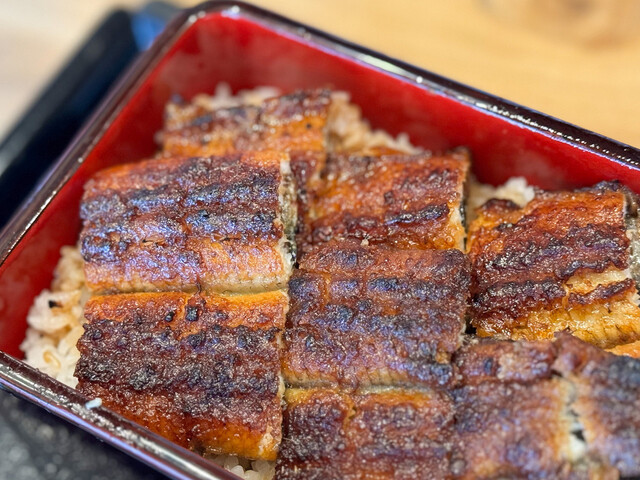
Una-ju is eel over rice in a box, eaten one way. Hitsumabushi is chopped and eaten in stages.
Find it in Nagoya
See unagi in Nagoya and our Nagoya food guide. Once you know how to eat hitsumabushi, the TabeDog map can show which houses are open before your train.
Cover photo: Hitsumabushi by Kanesue, CC BY 2.0, via Wikimedia Commons.