Best Cities to Visit in Japan in Winter: Top 3 for Food
The best cities to visit for food in Japan in winter: Sapporo, Kanazawa and Fukuoka, with Tabelog picks, prices, queues and how to pay.

As the weather gets colder, the three best cities to visit for food in Japan in winter are Sapporo, Kanazawa and Fukuoka. Sapporo has deep snow and miso ramen, Kanazawa has snow crab season, and Fukuoka stays mild enough to walk to a hot pot dinner.
Each city below comes with three restaurants, plus what to order, how to pay and how long the line runs. Ratings are from Tabelog, Japan's biggest restaurant review site, as of October 2026. Prices marked as budgets are Tabelog's bands; anything else is what reviewers reported paying.
Best cities to visit in Japan in winter at a glance
| City | Best for | January high / low | January snowfall | What to eat |
|---|---|---|---|---|
| Sapporo | Deep snow, festivals | -0.4°C / -6.4°C (31°F / 21°F) | 137 cm | Miso ramen, soup curry, jingisukan |
| Kanazawa | Crab, snowy gardens | 7.1°C / 1.2°C (45°F / 34°F) | 67 cm | Snow crab, seafood bowls, oden |
| Fukuoka | Mild weather, hot pot | 10.2°C / 3.9°C (50°F / 39°F) | 1 cm | Motsunabe, mizutaki, tonkotsu ramen |
Weather figures are 1991–2020 averages from the Sapporo, Kanazawa and Fukuoka climate tables.
Our test for Japan in winter was simple: does the cold improve what's on the table? Every restaurant here is within reach of the city center, rated 3.6 or higher with at least 700 reviews, and costs less than a splurge dinner. On Tabelog, 3.5 and up is excellent, so don't read these scores like Google stars.
1. Sapporo: best for snow and rich ramen
Sapporo is the pick if snow is the point of your trip to Japan in winter. It averages 137 cm of snowfall in January alone, and the Sapporo Snow Festival runs February 4–11, 2027 at Odori Park, Tsudome and Susukino. Arrive earlier and you still get the White Illumination (November 20, 2026 to March 14, 2027) and the German Christmas Market in Odori Park (November 20 to December 25).
The food is built for this weather, and all three places below are a short walk from Susukino, the nightlife district. For more options, see our Sapporo ramen page and soup curry in Sapporo.

Keyaki (けやき), Susukino
Keyaki is the miso ramen shop to try first, partly because its hours forgive jet lag: it serves until 03:00 most nights. Reviewers describe a rich, garlicky miso broth built on pork bones and vegetables. In October, they paid ¥1,200 for miso ramen, ¥1,400 for spicy and ¥1,700 for chashu.
Buy your ticket from the machine inside before joining the line. It only takes cash. Waits in recent reviews ranged from a few minutes to an hour, and one reviewer still found four people ahead at 01:00.
Tabelog: 3.70 (3,291 reviews) · Budget: ¥1,000–¥1,999 · Pay: cash only · Reservations: not taken · Seats: 8, counter only · Hours: Mon–Sat 10:30–03:00, Sun and holidays 10:30–02:00 · Getting there: 3 min walk from Susukino Station
Suage+ (スープカリー スアゲ プラス), Susukino
Soup curry is a thin, spiced broth loaded with meat and vegetables, and it's Sapporo's other signature bowl. At Suage+, reviewers order the fried chicken leg and add the grilled lamb topping. One reviewer found about 40 people waiting before opening on a weekday and still got in on the first seating. Another joined a LINE queue with 10 groups ahead and found it moved quickly.
Tabelog: 3.69 (2,396 reviews) · Budget: ¥1,000–¥1,999 (dinner reviewers often paid ¥2,000–¥2,999) · Pay: cash, PayPay, Alipay; no credit cards · Reservations: not taken · Seats: 49 · Hours: Mon and Thu 11:30–20:30, Tue, Wed and Fri 11:30–21:00, weekends and holidays 11:00–21:00 · Getting there: 2 min walk from Susukino Station

Daruma Honten (成吉思汗だるま 本店), Susukino
Jingisukan is mutton or lamb grilled at your seat on a domed iron plate, which is a very good way to warm up. Daruma's main branch has 14 counter seats and serves until 05:00. Reviewers waited about 30 minutes at 22:00 on a Saturday, and one spent around ¥5,000 on three servings of meat, vegetables and oolong tea. The first plate of vegetables now costs extra.
If you'd rather book, Tabelog's listing says Daruma's 7-4 branch takes reservations and runs 17:00–23:00.
Tabelog: 3.68 (2,048 reviews) · Budget: ¥4,000–¥4,999 · Pay: cash, card (VISA, Mastercard, JCB, AMEX, Diners) · Reservations: not taken at this branch · Seats: 14, counter only · Hours: daily 17:00–05:00 · Getting there: 7 min walk from Susukino Station
2. Kanazawa: best for snow crab and old streets
Kanazawa is the food-first choice for Japan in winter, and about 2.5 hours from Tokyo on the Hokuriku Shinkansen. Snow crab season opens November 6 and runs to March 20, with prices from ¥1,000 to ¥20,000 per crab depending on size. Look for the blue tag that marks a male kano-gani caught in Ishikawa. The smaller female kobako, which locals favor for its roe, has a much shorter season that closes on December 29.
Snow isn't guaranteed before the new year, with averages of 24 cm in December and 67 cm in January. From November 1 to mid-December, gardeners rope the pines at Kenrokuen with yukitsuri, conical supports that protect the branches from heavy snow, so the garden looks wintry even without it.
For more stalls and counters, browse seafood in Kanazawa.

Ikiiki Tei (いきいき亭), Omicho Market
Ikiiki Tei is a 10-seat counter that opens at 07:00, which makes it the breakfast to plan a morning around. You write your name and order on a sheet of paper on the wall, then wait. One reviewer arrived at opening in September and sat down about an hour later. Order the house seafood bowl, which arrives with fish and rice served separately, and add grilled nodoguro (blackthroat seaperch) sushi if it's on offer.
Tabelog: 3.65 (1,094 reviews) · Reviewers paid: ¥2,000–¥4,999 · Pay: cash only · Reservations: not taken · Seats: 10, counter only · Hours: Mon–Thu 07:00–13:30, Fri–Sun 07:00–14:30 · Getting there: inside Omicho Market, 15 min walk from Kanazawa Station east exit
Yama San Sushi (山さん寿司 本店), Omicho Market
Yama San suits anyone who wants a table and a sit-down meal at the market. The headline order is the towering seafood bowl with a crab claw on top, ¥3,600 in recent reviews, and a set of 10 sushi pieces was ¥3,500. Opinions vary: one reviewer called the sushi decent but wished for more local fish, while a family raved about the snow crab and grilled soft roe from the side menu. It closes when the fish runs out, so go before lunch.
Tabelog: 3.66 (1,344 reviews) · Budget: ¥3,000–¥3,999 · Pay: cash, card (JCB, AMEX, Diners; VISA and Mastercard aren't listed), PayPay · Reservations: limited to a few groups a day · Seats: 32 · Hours: daily 09:00–16:00, closed days not fixed · Getting there: 15 min walk from Kanazawa Station
Oden Izakaya Miyuki (おでん居酒屋 三幸), Katamachi
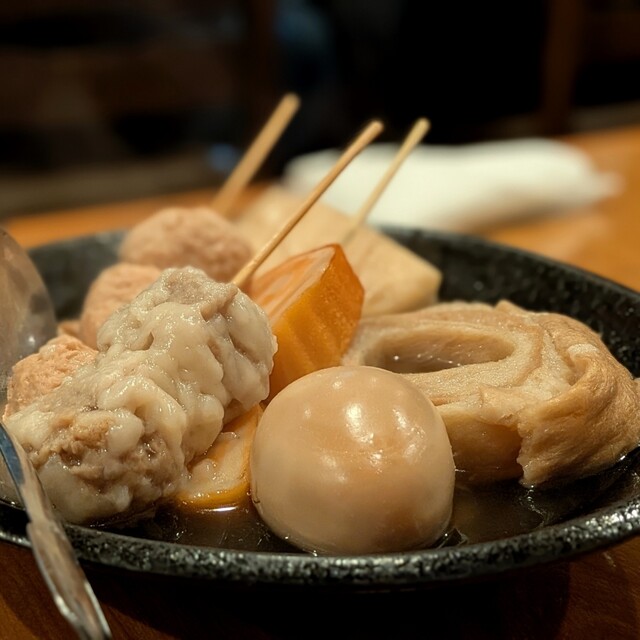
Kanazawa has its own style of oden (ingredients simmered in dashi), and Miyuki is where to eat it. Reviewers order the broth-soaked wheat gluten, sardine dumplings, beef tendon and egg roll. Book if you can: one reviewer waited about two hours from 18:00 on a Thursday, and another booked a month ahead. Solo diners do better at opening, with one seated after a brief wait just after 16:30.
Reservations are by phone at 076-222-6117, so ask your hotel to call if you don't speak Japanese. Groups of three or more must book.
Tabelog: 3.63 (714 reviews) · Budget: ¥3,000–¥3,999, plus a service charge · Pay: cash only · Reservations: yes, by phone · Hours: Mon–Sat 16:00–22:00 · Closed: Sundays, holidays and the second Monday of the month
3. Fukuoka: best for mild weather and hot pot
Fukuoka is the answer if you want Japan in winter without the snow boots. January highs average about 10°C and snowfall barely registers. It's also the city where the winter menu makes the most sense: two famous hot pots, plus tonkotsu ramen and street stalls in Tenjin and Nakasu most evenings. Hakata Station sits on the San'yo and Kyushu Shinkansen lines.
Our Fukuoka hot pot page has more options. Reserve hot pot dinners ahead, since this is their busy season.

Hakata Motsunabe Tokunagaya (博多もつ鍋 徳永屋 総本店), Gion
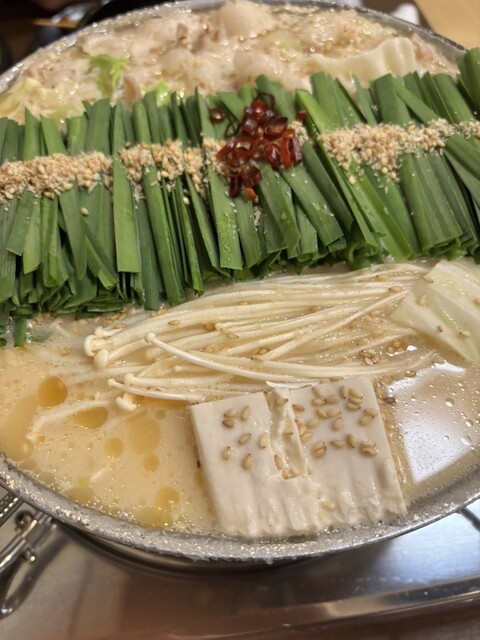
Motsunabe is a beef offal hot pot with cabbage, garlic chives and garlic. Tokunagaya's main branch is an easy first try because it takes nearly every payment type and accepts bookings. A weekend lunch reviewer paid ¥1,780 for the wagyu miso motsunabe and ¥1,180 for goma-saba (sesame mackerel). Others single out the tokuteba chicken wings. From 16:00 there's a ¥380 per person cover charge.
Tabelog: 3.72 (1,186 reviews) · Budget: ¥4,000–¥4,999 dinner, ¥2,000–¥2,999 lunch · Pay: cash, card (VISA, Mastercard, JCB, AMEX, Diners), Suica, PayPay · Reservations: yes, 050-5872-9768; 2-hour limit at dinner · Hours: Mon and Wed–Fri 16:00–24:00, weekends and holidays 11:30–24:00 · Closed: Tuesdays · Getting there: 5 min walk from Gion Station exit 2
Daidai (橙), Ohori Park
Mizutaki is chicken simmered in a rich broth, and Daidai treats it as a course. Staff cook the pot at your table in stages, serving the broth on its own, then with chicken, then meatballs, then vegetables. You finish with zosui (rice porridge) or somen noodles. The listing calls it Michelin-listed, and one reviewer mentions a Bib Gourmand.
Daidai opens each month's reservations on the 1st of the month before, so January tables open December 1.
Tabelog: 3.73 (1,726 reviews) · Budget: ¥5,000–¥5,999 dinner, ¥4,000–¥4,999 lunch, plus a service charge · Pay: cash, card (VISA, Mastercard, JCB, AMEX, Diners), PayPay · Reservations: yes, 050-5597-4377 · Seats: 70, tables only · Hours: daily 12:00–22:00, last entry 20:30 · Getting there: 3 min walk from Ohorikoen Station
Hakata Issou (博多一双), Hakata Station
Issou has 5,804 Tabelog reviews and the line to match, so timing matters. Reviewers counted about 50 people at 13:30 on a Friday, 30 at 20:30 on a weeknight, and only 10 at 15:10. A Sunday arrival at 11:15 took about 100 minutes to get a bowl. The creamy, frothy pork-bone broth comes with thin noodles; you buy a ticket from the machine and can ask for your noodles kata (firm). Reviewers paid ¥1,130 for ramen with a seasoned egg and ¥1,430 for the special.
Tabelog: 3.72 (5,804 reviews) · Budget: under ¥1,000 listed; the review-based average is ¥1,000–¥1,999 · Pay: cash only · Reservations: not taken · Seats: 21 · Hours: daily 11:00–24:00, closed days not fixed · Getting there: 6 min walk from Hakata Station
When to visit Japan in winter for food
- November to December: the best overlap. Both crab types are in season in Kanazawa, Kenrokuen gets its ropes, and Sapporo's lights and Christmas market are up.
- January: the snowiest month in Sapporo and Kanazawa. Pair it with Fukuoka if you want one mild stop.
- Early February: go to Sapporo for the Snow Festival, and book your hotel well ahead.
Five of the nine restaurants above don't take credit cards, so carry cash in all three cities. If you're still building your restaurant list, here are the Japan food websites we'd use on a first trip.
Frequently asked questions
What is the best city to visit in Japan in winter?
Sapporo if you want deep snow and festivals, Kanazawa if you care most about crab and seafood, and Fukuoka if you'd rather stay mild and eat hot pot. For a first trip to Japan in winter with one stop, Kanazawa is the easiest from Tokyo, at about 2.5 hours by Shinkansen.
When does snow crab season start in Kanazawa?
November 6 each year. Male crab runs to March 20, and female kobako crab closes much earlier, on December 29. Storms can delay opening day, so check with the restaurant before you plan a meal around either.
Does it snow in Fukuoka?
Rarely enough to matter. Average snowfall is 1–2 cm a month from December to February, and January highs average about 10°C (50°F).
Do I need reservations for restaurants in Japan in winter?
For hot pot and popular izakaya, yes, where the restaurant takes them. Most of the ramen, soup curry and market counters here don't accept bookings, so plan on queuing and go outside peak meal times.
Find more places to eat in Japan in winter
Compare restaurants near your hotel on the TabeDog map, which shows ratings, hours and payment methods in English. If you're heading north, our guide to eating in Sapporo goes further.